How is aircraft noise generated?

What is aircraft noise, and how is it generated?

Noise from aircraft is generated from both the engines and the airframe, and examples of each are detailed below:

  • Engine noise
    • Combustion
    • Engine parts such as the fan or propeller
    • Exhaust
  • Airflow around the aircraft’s frame
    • Fuselage and wings (aircraft body)
    • Landing gear
    • Flaps and air brakes

Aircraft produce the most noise during take-off, when the engines are producing the most power and thrust to accelerate the aircraft down the runway. When an aircraft is on approach, it is slowing down to land and hence the engines will be producing less thrust and therefore less noise. Airframe noise will be more apparent during this phase of flight. Different aircraft will produce different noise levels depending on the size and weight of the aircraft and the engine type fitted.

What influences aircraft noise?

Aircraft noise experienced on the ground can vary depending on a number of factors including:

  • The operation is an arrival, a departure, an overflight or a training flight
  • Altitude
  • Lateral distance
  • Weather, including cloud cover and precipitation
  • Wind strength and direction

Whilst these factors influence how noticeable noise is from an aircraft, our local surroundings can also influence how much, or how little aircraft noise we experience.

For example, if you live in a noisy area, potentially within a town or city, or close to a road, the background noise level from those sources is likely to mask the sound of aircraft noise. Conversely, in a quiet area the masking effect isn’t as present and the same aircraft is likely to be more noticeable.

It is important to note that annoyance is a personal experience, what might be annoying to one person may not be annoying to another. Despite this, the airport takes noise monitoring seriously and has an active program to monitor analyse and report on the aircraft and background noise level in the local community.

Has aircraft noise changed?

Modern aircraft produce far less noise than older aircraft, producing around 90% less noise than the aircraft which were operating in the 1960s. We are seeing a continual transition to more modern quieter aircraft, with the Boeing 737-800 passenger aircraft being replaced with the Boeing 737-8200 Max. This is also apparent with Cargo operators, with new Boeing 777’s replacing older Boeing 747’s.

Take a look at our Noise Level Dashboard under the ‘Your Area’ heading to see how noise is recorded at our monitors.

Contacting the Airport about noise

Submitting a complaint using a mobile application

Whilst this portal and our flight tracking tools have been setup to help you investigate noise concerns yourself, we recognise that not all of your questions will be answered and are happy to take questions, enquiries or if you would like to make a complaint about an aircraft that caused a disturbance.

We provide an online tool (WebTrak) that enables you to see air traffic in the vicinity of London Stansted Airport. View WebTrak here.

You can also submit a noise complaint directly through our WebTrak system.

You can also submit questions, enquiries and complaints to us via a number of methods including:

You can report aircraft disturbance by filling out our online Noise Complaint Form, by emailing stanstednoiseline@stanstedairport.com or by using our automated complaint line on 0800 243788.​

If you wish to write to us directly, our address is:​

Flight Evaluation Unit​
Enterprise House​
Stansted Airport​
Stansted​
CM24 1QW​

Once received, the airport will investigate your submission and respond in accordance with the established procedure.

Find a particular flight

Introduction

WebTrak is our online flight tracker which provides the aircraft flight number, aircraft type, its height and track.

We also show aircraft which do not operate from our airport. You can see aircraft arriving and departing, sometimes in a holding pattern, operations from other airports nearby, as well as the data direct from our fixed and mobile noise monitors.

WebTrak uses data taken directly from air traffic control (ATC) radar, this is the same data that ATC use to safely manage aircraft in the sky. It is fed directly into the Airport Noise Monitoring and Management System (ANOMS) which powers the flight tracking systems.

Please note: A delay of up to 30 minutes is applied to the replay of ‘live’ data to ensure all data is presented as accurately as possible.

How to use WebTrak

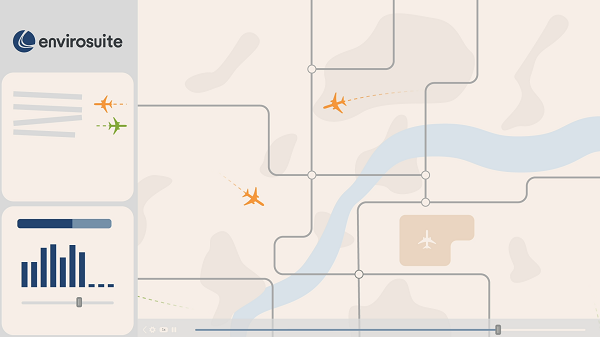
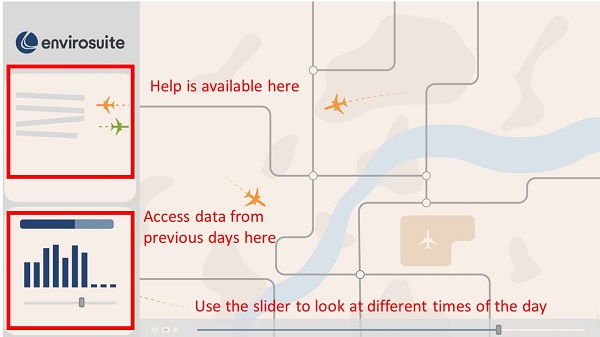
Showing where the help can be found (top left) in webtrak, where historical data can be found (bottom left) and how to move time (slider at bottom)

WebTrak, allows you to both investigate flights above your area in near real-time as well as investigating historical data. There is lots of online help contained in the tool (available through the menu on the left hand side of the screen) to help you understand the icons and method of operation. But to summarise some of the key features, you can:

  • Investigate a specific flight that might have caused a disturbance,
  • Investigate flights from the the busiest part of a day,
  • Discover where a flight was going or where it came from
  • Analyze the proximity of flights to your location by dropping a pin on the map.

Sometimes the tool will display flight routes or rainfall layers. These sorts of overlays provide a great visual tool for analysing flight corridors or understanding adverse weather.

You can also make a complaint about the flight, which will be sent through to us for review. This method helps us because we can immediately identify the aircraft that caused the disturbance.

I can’t see the flight that disturbed me

Webtrak takes a feed directly from Air Traffic Control (ATC) and whilst we aim to display all flights, you may notice that some are missing. This could be due to a number of reasons including:

  • If it was a military, police or civil protection flight
  • If the aircraft was carrying a Government Official or Head of State
  • If the aircraft was operating to/from another airport

Useful websites

The following is a list of useful links for more information about airport operations, airspace compliance, aviation safety and noise in general:


Aviation Acronyms

The aviation industry loves acronyms, where we have used acronyms we have tried to also include its expanded form, however, this may not have always taken place. If you have an acronym that you are unfamiliar with, then the acronym database is a good resource.

Link: Air Navigation Acronym List


The Sky Library

If you want to dig into a wide range of aviation topics you can explore the Skybrary. Initially setup by EURCONTROL, it involves a broad range of industry organisations and takes the form of an online wiki. However the platform has a robust content management and control process to ensure the quality, credibility and consistency of the information.

Link: SkyBrary


The Civil Aviation Authority

The UK’s aviation regulator contains masses of information that may be useful, from operating drones to travel advice. The Civil Aviation Authority (CAA) is the statutory corporation which oversees and regulates all aspects of civil aviation in the United Kingdom. It is a public corporation established by Parliament in 1972 as an independent specialist aviation regulator. One of its four environmental goals is to contribute to a cleaner and quieter aviation industry.

Link: CAA

Link: Airspace Change Portal


NATS

NATS provide air traffic services throughout the UK and are responsible for controlling aircraft in the airspace surrounding London Stansted Airport.

Link: NATS

Frequently asked questions

Here’s a compilation of some our most frequently asked questions and we’ll endeavour to update this list as new questions emerge:

Who is responsible for managing aircraft noise?

The policy framework and guidelines for managing noise are set at a national and international level but as the airport operator, it is our responsibility to manage noise locally around the airport. We do that by working closely with Air Traffic Control, Airline Stakeholders, the Airport Consultative Committee, the CAA, and the Government.


Can I request that helicopters do not fly over my house?

No, there are no prohibited areas, however, as helicopters are flying visually, we request that they avoid specific locations near the airport.


Can I get a noise monitor installed at my home?

Noise monitors are deployed in the local area to monitor and record noise from both aircraft and background sources. This allows us to evaluate trends and make comparisons between noise levels at different locations. The majority of our monitors have been in their current location for an extended period of time and you can see the location of these monitors within our noise report on this portal.

Whilst it is difficult to re-locate these long-term monitors, the airport has access to a short term monitoring program where noise monitors can be located in areas for short periods. The monitors within this program are typically used to collect data for a study for to further understand a specific issue in a certain area. The monitors are placed in response to requests made through the Consultative Committee from local Parish Councils. However, requests from local residents are taken into considerations as part of the wider monitoring program.


What affects the selection of runways on any given day? And why does the selected runway differ to the wind forecast?

The most common factor is wind direction as aircraft typically take-off and land into wind. However it is not only the wind at ground level that must be considered, but also the wind at altitude, which can often be substantially different. It is for this reason that the local weather forecast may suggest a different wind direction to that in which the airport is operating.

In addition, factors such as the traffic flow, local airport works and thunderstorms may restrict or temporarily alter how runways are used at airports.


What are minimum flying heights for aircraft?

For typical arrival and departure operations to/from airports there are no minimum flying heights although pilots are encouraged to fly using the optimal noise abatement procedures, which are designed to keep the aircraft higher for longer to reduce noise.

Outside of the usual arrival/departure operations, in most regions of the world there are altitude restrictions which pilots must not descent below when they are overflying cities, towns or populous areas. Typically this is 1,000 ft or when over other non-populated terrain 500 ft. However exceptions do apply, for example:

  • Military, police, medical and search and rescue operations
  • in situations where the weather requires lower flying
  • for helicopters flying within specified access lanes
  • where the aircraft is engaged in air work for which the operator has a permit (such as media helicopters)

Planes are flying lower than they used to

Some planes are much larger than others, and the size difference can make a person perceive they are closer, when they are at the same height as previously. Whilst factors such as altitude and temperature can sometimes affect the performance of planes as they take off; for example, hot weather can affect a plane’s ability to climb as quickly as they do in the cooler winter months.


Pilots fly where they want to:

Commercial aircraft that carry passengers and/or cargo are typically operating within controlled airspace managed by Air Traffic Control (ATC). ATC act as a coordinator to ensure aircraft are safely separated and efficiently directed towards their destination. You can view where aircraft fly through this portal or by using our flight tracking tools.


Flight paths have changed:

Aircraft departing from London Stansted Airport are required to follow one of six initial flight paths, known as Noise Preferential Routes (NPRs) until they reach the required minimum altitude of 3,000ft or 4,000ft depending on the route and time of day. It is at this point that the aircraft can be released from the NPR onto a more direct heading to its destination by ATC. Our NPRs are designed to minimise the number of people impacted by aircraft noise by diverting aircraft away from some of the more built-up areas and have been in place since the airport development in the 1990s.

It is not always possible to keep aircraft contained within these NPRs. Adverse weather conditions or the presence of other air traffic may require an aircraft to deviate from the NPR before reaching the minimum required altitude. These deviations are monitored regularly by the airport, and the results are reported online.

Unlike departures, there are no predetermined routes for arriving aircraft. The only area where we can predict the flight path for arrivals is the final approach, the 8 to 10 miles of flight prior to landing where aircraft follow the guidance from the instrument landing system or ILS.  Although typically arrival tracks do tend to concentrate within a similar area, ATC have to be able to direct arrivals anywhere within controlled airspace to maintain safety and efficiency.