Sound Insulation Grant Scheme
London Stansted provides mitigation measures for aircraft noise impacts in the local community by the provision of acoustic insulation for properties. This includes:
- Offering households subject to high levels of noise (69dBA Leq or more) assistance with the costs of relocating; and
- Offering acoustic insulation (applied to residential properties) to other noise-sensitive buildings that remain in education, healthcare, worship or community use that are exposed to medium to high levels of noise (57dBA Leq or more).
To apply for the scheme please use the following form London Stansted Airport Sound Insulation Grant – Application Form.
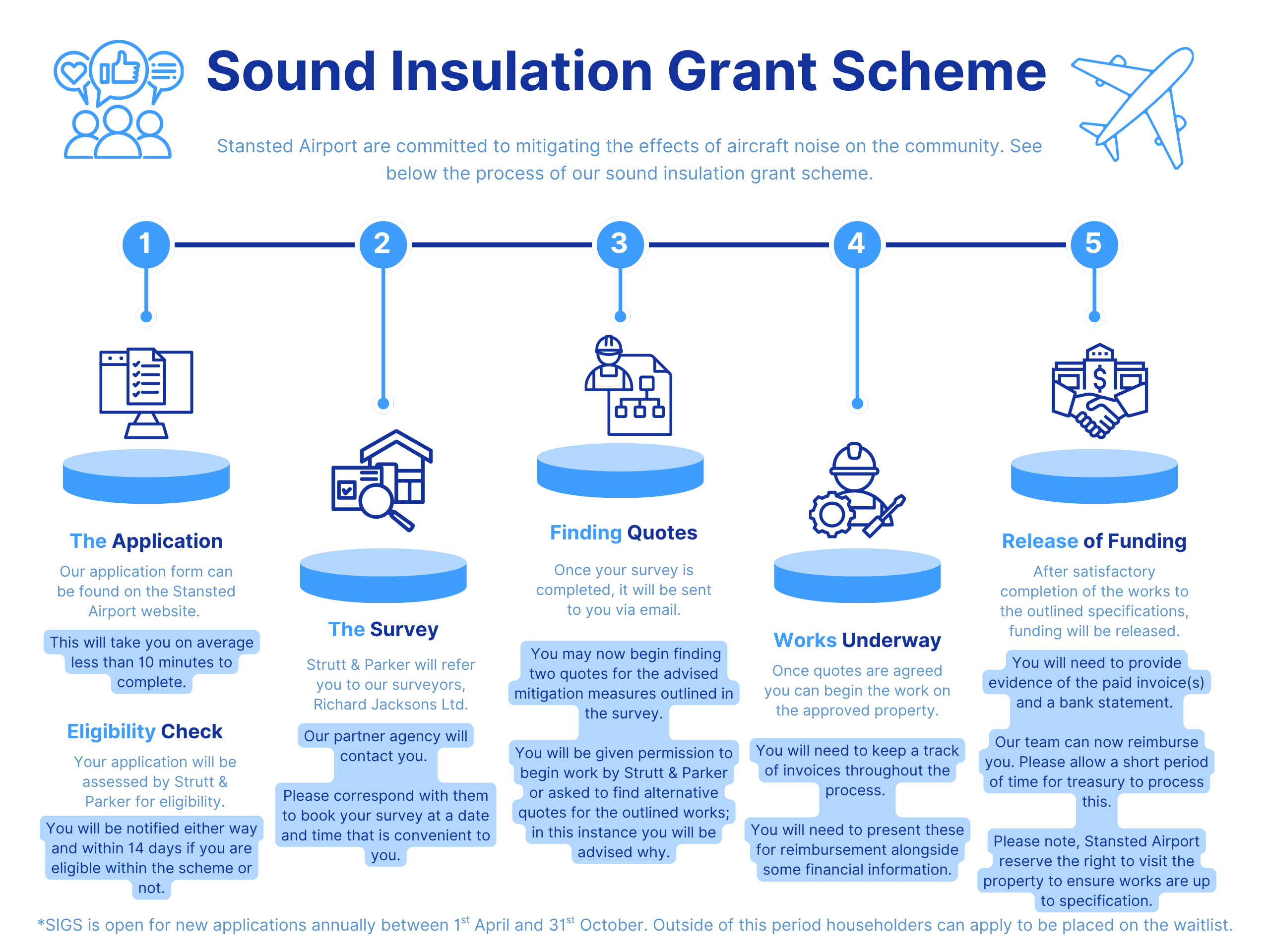
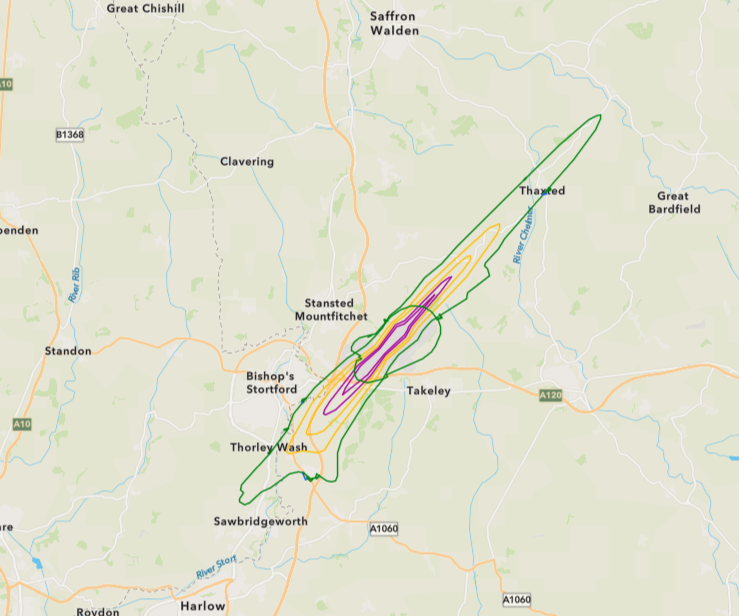
For an understanding of the process and eligibility, please review our process map and map.
What is a Residential Property?
A residential property is defined as ‘an individual dwelling registered for Council Tax’.
What is a Habitable Room?
A habitable room is any room used or intended to be used for sleeping or living which is not solely used for cooking purposes. It does not include rooms for bath or toilet facilities, service rooms, corridors, laundry rooms, hallways or utility rooms.
Does the entire SIGS grant have to be claimed at one time?
No.
The recommended work can be undertaken in stages with applications for SIGS payment submitted as work stages are completed up to the relevant maximum grant amount.
Can I apply for mechanical ventilation, where noise mitigation work has been previously undertaken outside of the SIGS scheme which has impacted on the ventilation of my home?
Yes.
Subject to survey, if acceptable noise mitigation work such as double or secondary glazing has been undertaken at an eligible residential property since 2021, outside of the SIGS scheme, and the works have impacted on the natural ventilation of the property, then the property may be eligible for mechanical ventilation.
Mechanical ventilation is not included within the SIGS unless specified noise mitigation measures have been undertaken which impact on the existing ventilation of the property.